
Proteomics Data Processing
Expert services to accelerate your proteomics research with highly demanding bioinformatic tools. Perform functional network analysis to achieve reliable and outstanding scientific discoveries.
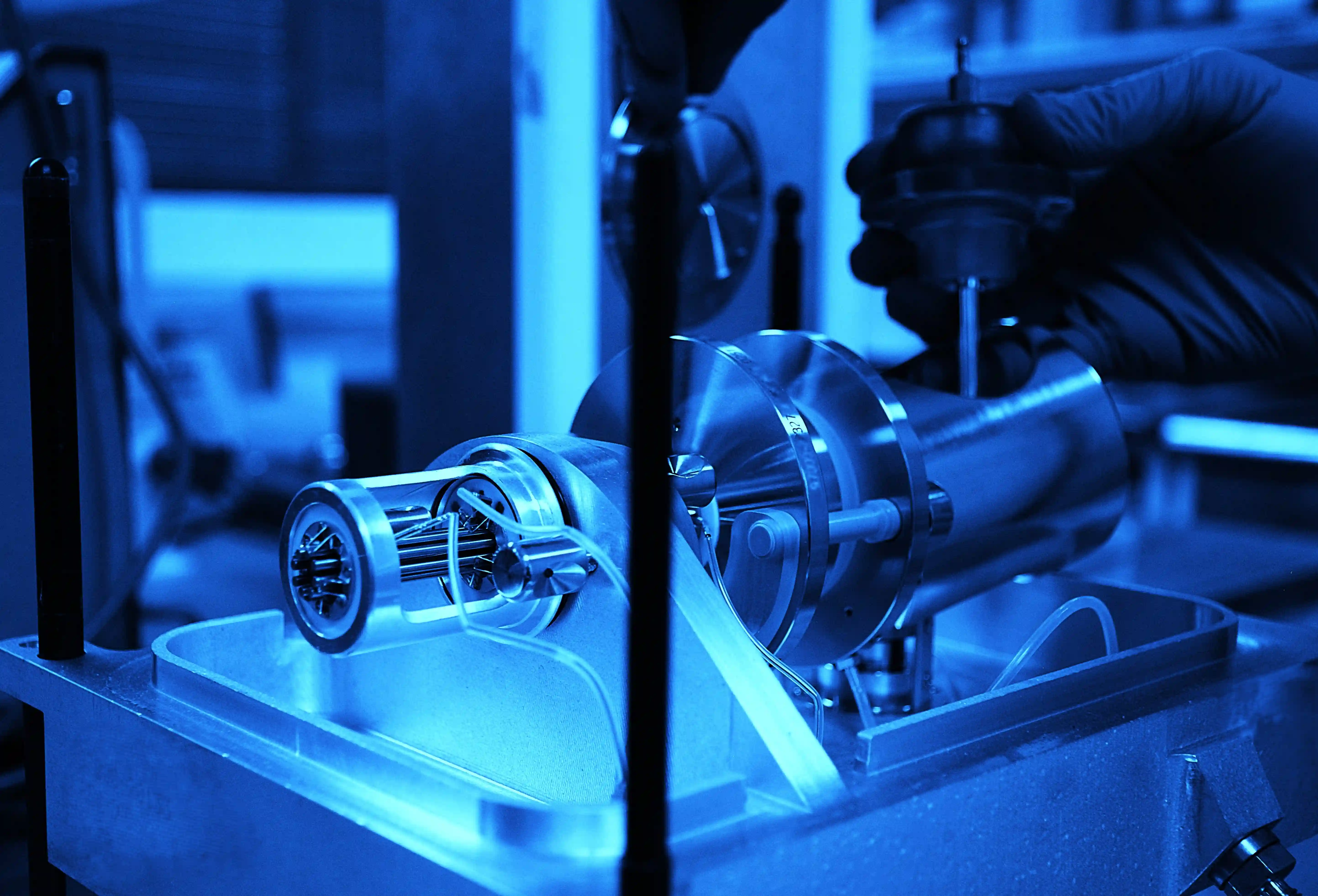
Research-grade computational workflows
We provide expert services on highly demanding software like MaxQuant/Perseus, Skyline, supported by Python and R programming, running on structured servers. This enables researchers to focus on biochemical discoveries and further validation.
We do the computational work – you keep the discovery
• MS-based peptide sequencing
• Protein identification
• Data-Dependent and Independent Acquisition (DDA and DIA)
• Quantitative proteomics: label-free and isotope-coded procedures (TMT, iTRAQ, SILAC, dimethyl)
• Phosphoproteomics: phosphosite-occupancy and phosphorylation changes
• Interactomics (Pull-down, thermal shift assay)
• Drug effects on cell lines, tissues and animal models
• Posttranslational modifications
• Preclinical and clinical analysis of plasma and serum
• Proteotype peptides for targeted proteomics: design and MRM data-processing
Functional annotation and enrichment analysis (GO, KEGG)
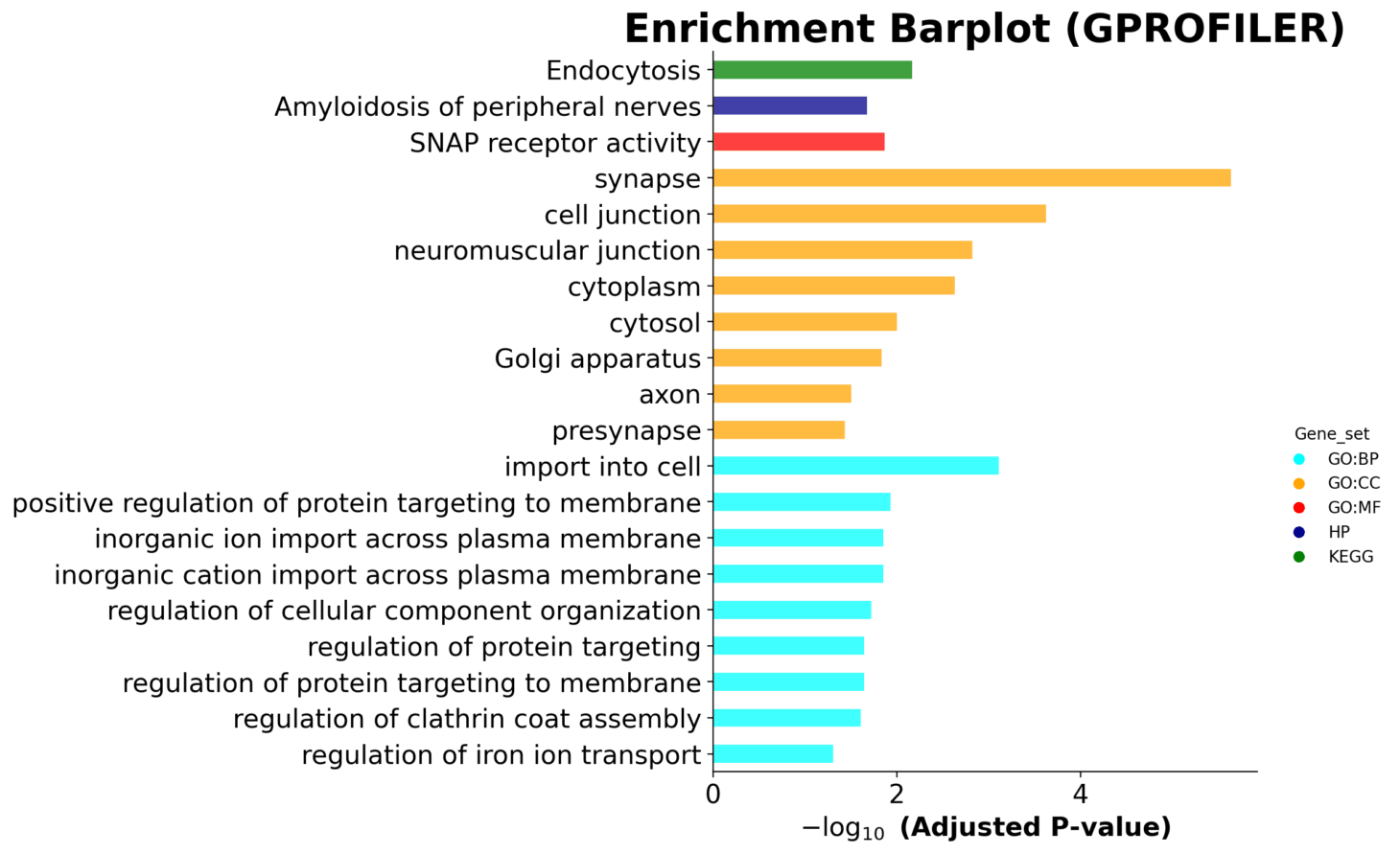
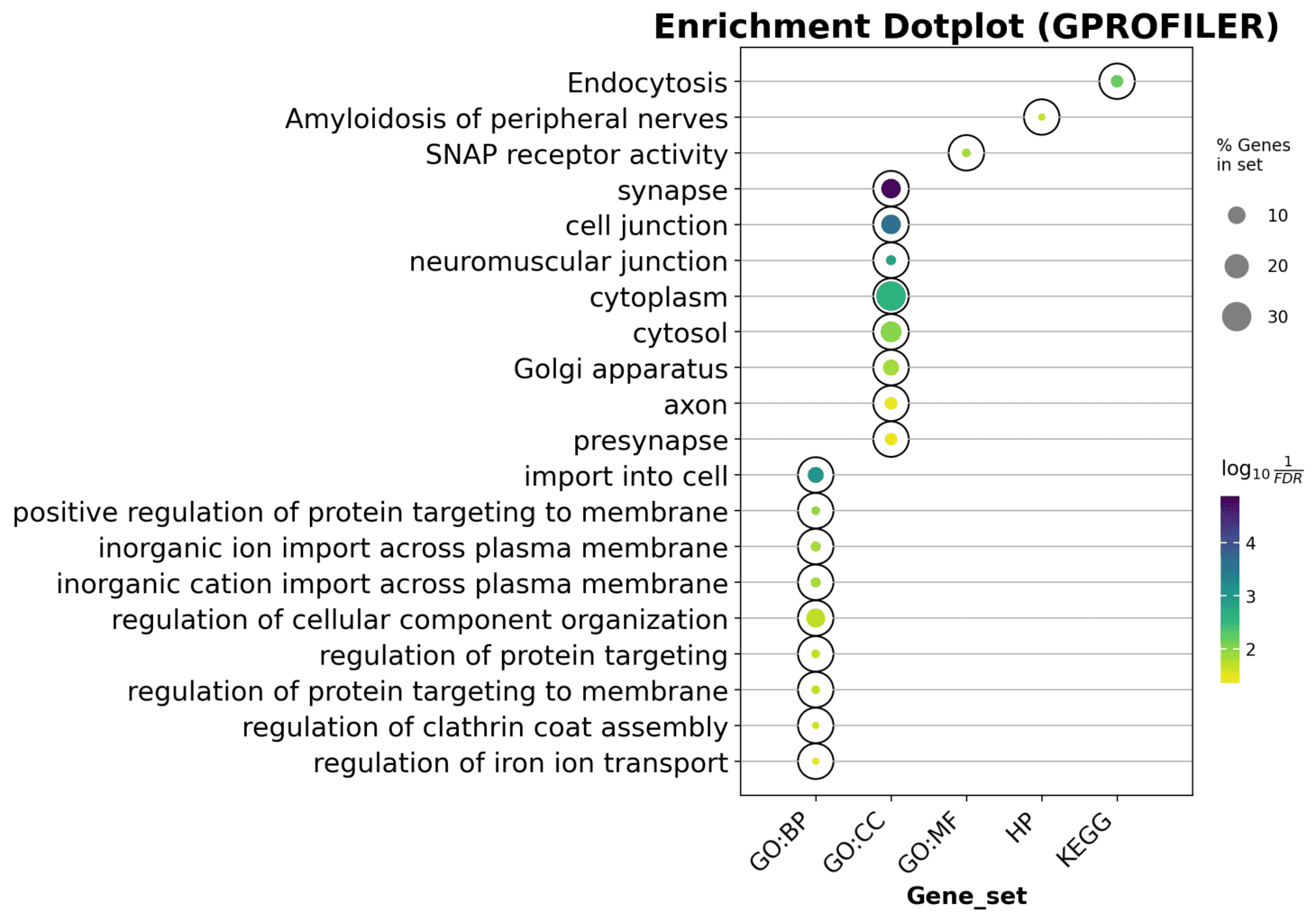
Characterize protein sets with Gene Ontology and KEGG pathway annotations, identify overrepresented biological terms, and prioritize interpretable mechanisms from large-scale datasets.
Clustering analysis
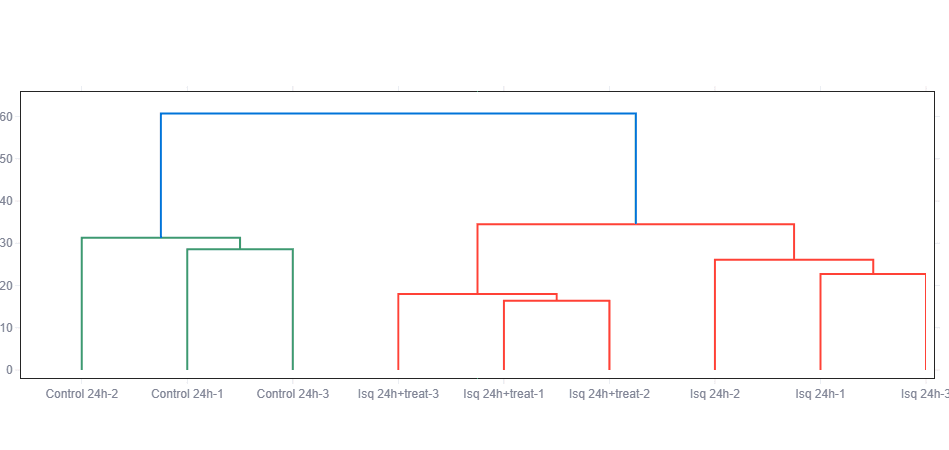
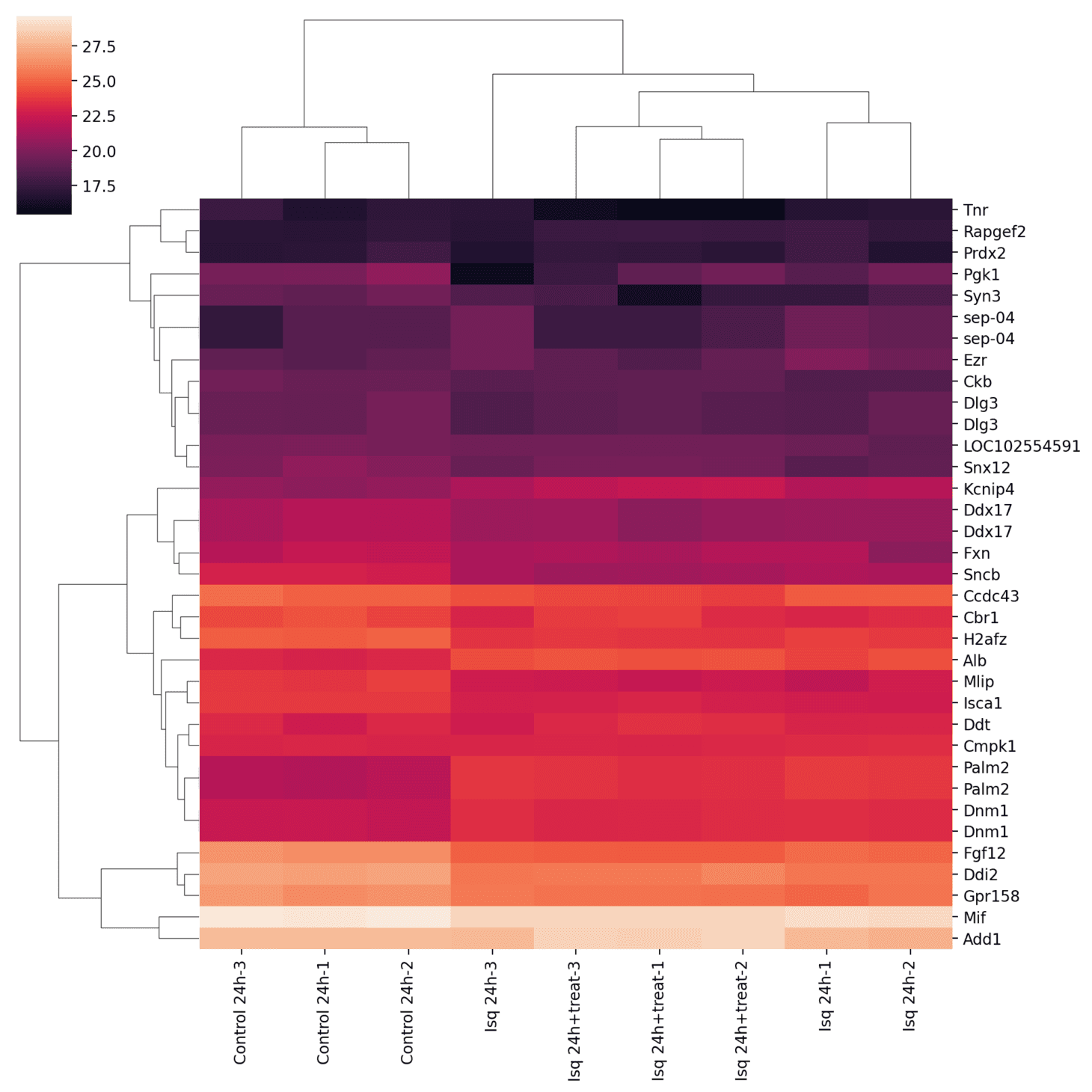
Group proteins and samples by abundance trends to reveal co-regulated patterns, phenotype-associated signatures, and biologically meaningful substructures in proteomic profiles.
Network analysis
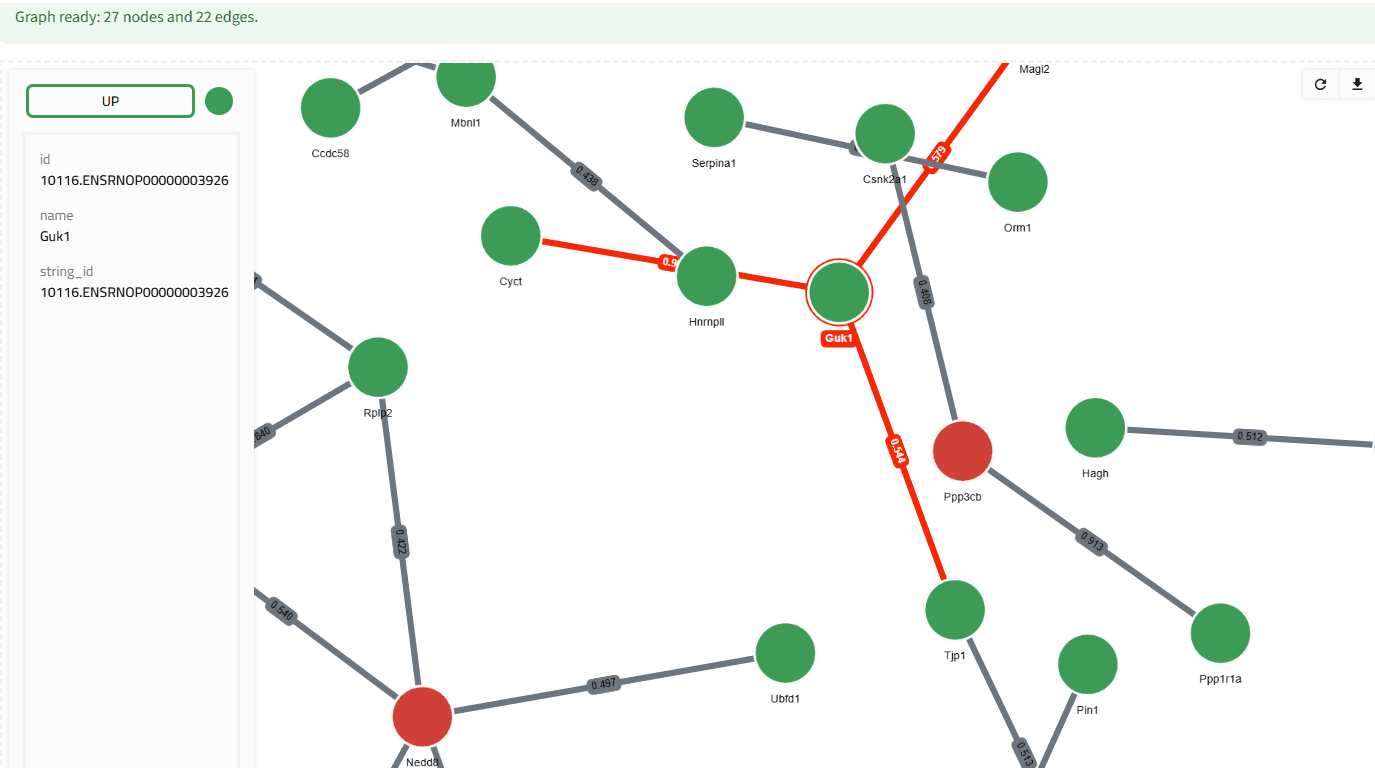
Build and interpret protein interaction networks to detect key hubs, functional modules, and connectivity changes that support robust biological hypothesis generation.
Service packages
Comprehensive proteomics analysis packages designed for researchers at any stage of discovery. From baseline quality control to publication-ready interpretation.
Essential Analysis Package
For labs needing reliable, publication-ready baseline analysis
What's included:
- MaxQuant processing < 20 LC-MS/MS files
- Quality control (QC) assessment
- Basic statistical analysis (e.g., fold change, significance)
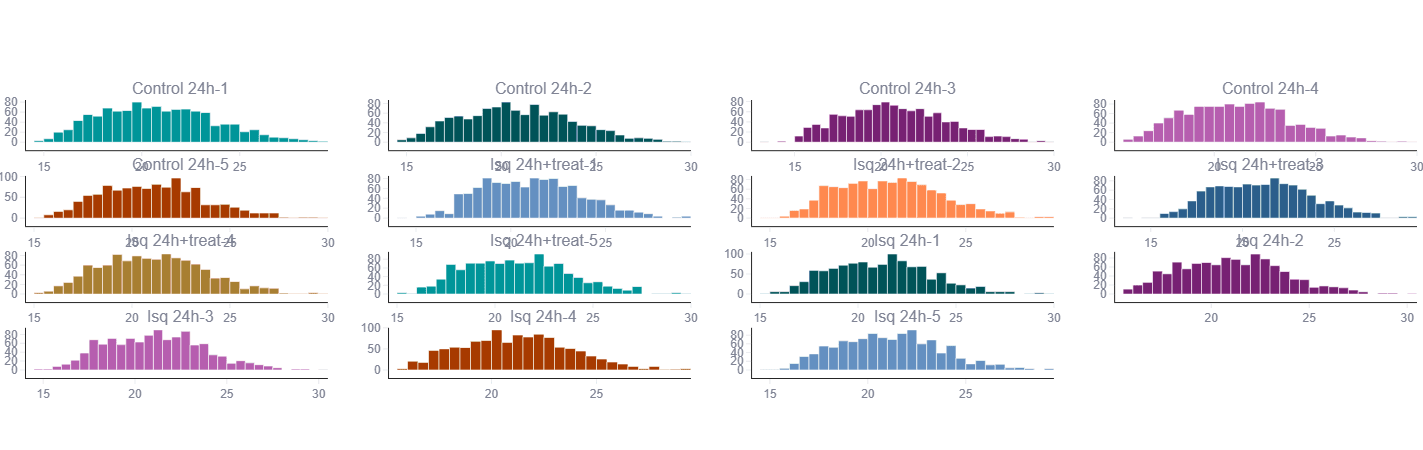
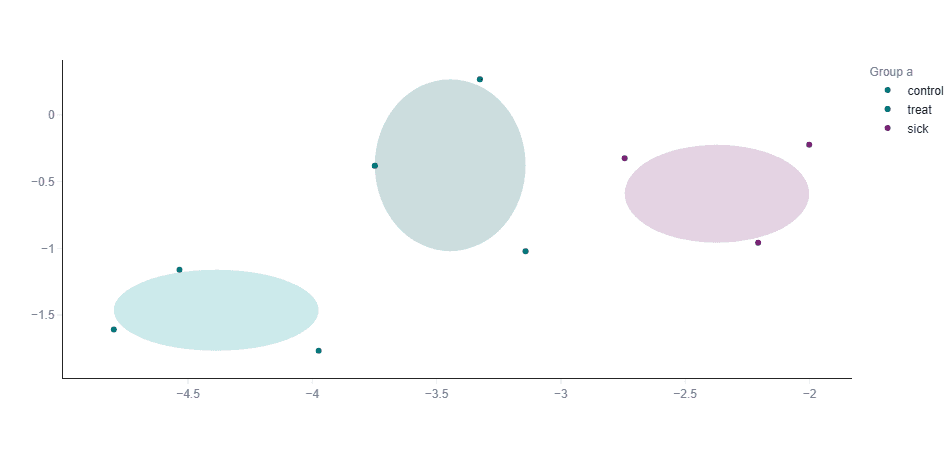
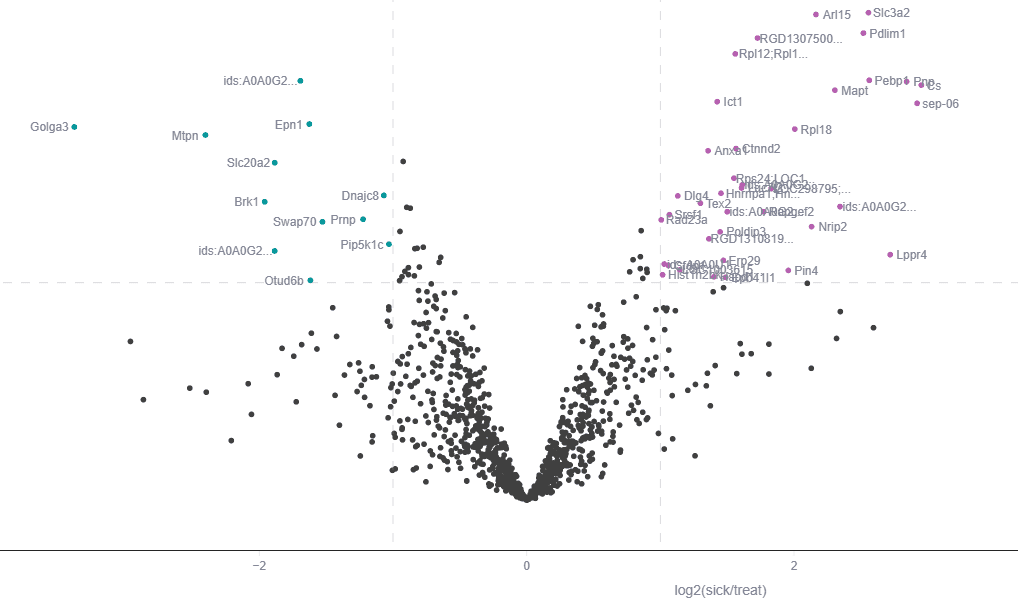
- Interactive dashboard for standard visualizations (PCA, volcano plots, dendrograms, heatmaps, etc)
Advanced Proteomics Package
For robust statistical analysis and publication-quality outputs
What's included:
- Everything in Essential < 100 LC-MS/MS files
- PTMs enrichment analysis
- Advanced statistical modeling (LFQ / TMT workflows)
- Interactive dashboard for standard visualizations (PCA, volcano plots, dendrograms, heatmaps, etc)
- Functional annotation and enrichment analysis (GO, KEGG pathway analysis)
End-to-End Proteomics & Interpretation
For complete analysis and biological insight
What's included:
- Everything in Advanced
- Phosphosite-specific stoichiometry changes
- Interactive dashboard for standard visualizations (PCA, volcano plots, dendrograms, heatmaps, etc)
- Functional annotation and enrichment analysis (GO, KEGG pathway analysis)
- Biological interpretation of results
- Written summary report (methods + results narrative)
How It Works: From Your Raw Data to Publication-Ready Results
No software installation. No scripting. Just send us your mass spec data, and we return clean, reproducible bioinformatics.
Step 1: You Share Your Data & Goal
- • Upload your raw files (RAW, mzML, MaxQuant txt folders, Skyline reports) via secure link or cloud folder.
- • Tell us your biological question (e.g., "find phosphosites that change between treated vs. control").
- • We perform a free quality check – within 72h we confirm if your data is suitable.
Step 2: We Propose an Analysis Plan
Within 2 business days you receive a clear proposal:
- • Which software workflows (MaxQuant, Perseus, Skyline, custom R/Python)
- • Exact statistical tests (e.g., Limma, t.test with FDR, PCA, clustering)
- • List of figures and tables you will get in our interactive dashboard
- • You approve or request changes – no surprise work.
Step 3: We Process Your Data
- • Your samples run on our dedicated servers using validated pipelines.
- • mid-progress checkpoints (e.g., QC report, normalization plots) for optional feedback.
- • Full reproducibility: we keep version-controlled logs and code.
Step 4: You Get a Complete Deliverable
Within agreed turnaround (typically 5-15 days for a standard project):
- • Interact with your results in our interactive dashboard. Modify some parameters and visualize the new graphics.
- • Publication-ready figures (PDF, PNG, or SVG)
- • Clean Excel tables with all results (p-values, fold changes, GO/KEGG annotations)
- • Methods paragraph ready to paste into your manuscript
Step 5: Proceed with Payment
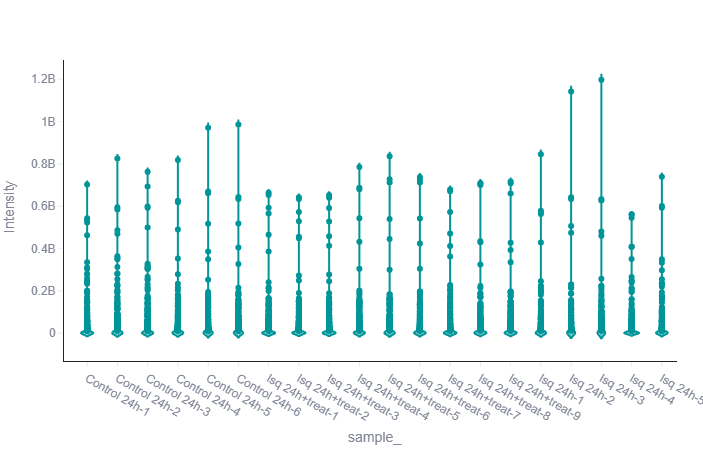
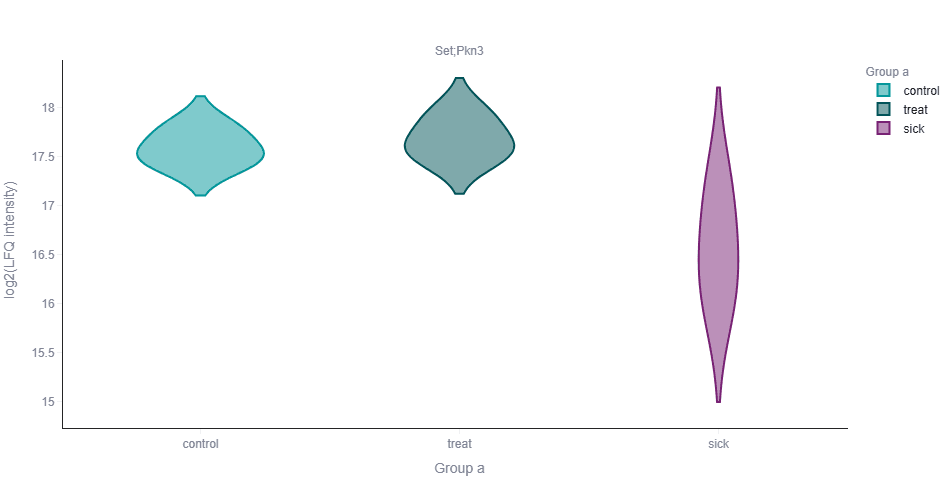
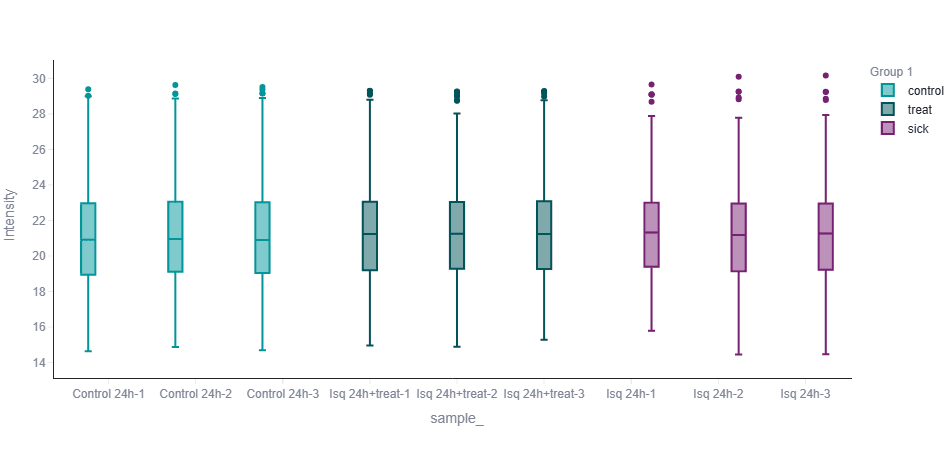
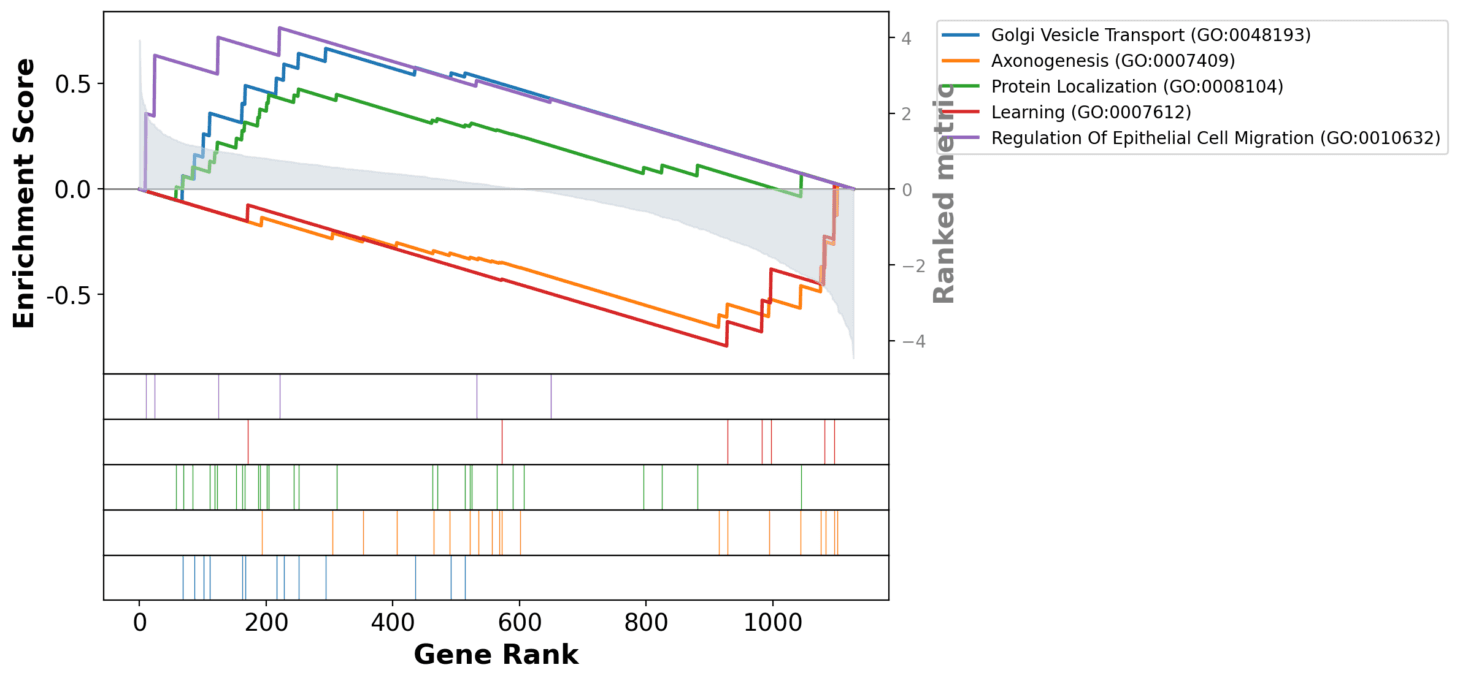
Some Dashboard graphs to interact with
Ready to get started?
Contact us to discuss your project and find the perfect package for your research needs.
Get in Touch